Getting the lead out

Nurse Ashley Stacy-Boddapati, MPH ’25, the School of Public Health’s inaugural Emerging Leader Award honoree, founded a grassroots organization that’s tackling childhood lead poisoning in North Carolina and beyond.

In 2023, the children’s food company WanaBana recalled its fruit puree and cinnamon apple sauce due to exceptionally high levels of lead contamination. Hundreds of kids across the country were identified as having consumed the products. The FDA eventually determined that the cinnamon was likely intentionally adulterated with lead chromate to enhance its color and/or increase its weight.

Lead poisoning in children can damage the nervous system, slow growth and development and lead to learning and behavioral problems. It’s linked to poor impulse control, attention-deficit and hyperactivity disorders, hearing and speech problems, anemia and seizures—all irreversible effects.

The first cluster of children impacted by the WanaBana recall—22 children in all—was identified in North Carolina. 

At the time, registered nurse Ashley Stacy-Boddapati, MPH ’25, was conducting clinical research at Syneos Health. She also happened to be a Brown graduate student building her Online MPH practicum. The practicum is an anchor of Brown’s MPH program and gives students hands-on experience addressing real-world public health issues. 

Stacy-Boddapati decided to focus her practicum on lead levels in spices and other often-overlooked sources. She discovered lead was present in spices, ceremonial powders and other products commonly used throughout the growing South Asian and Middle Eastern communities of North Carolina.

This work led her to co-found the Clean Spice Initiative—a grass-roots enterprise grounded in clinical and community ties, with the goal of tackling lead poisoning in North Carolina. Her key collaborators are Drs. Deepthi Gowrishankar and Maniraj Jeyaraju, two primary care physicians. They meet every month and work to raise awareness through community and clinical outreach. 

Today, Stacy-Boddapati is the statewide nurse consultant to the North Carolina Childhood Lead Poisoning Prevention Program. Her founding of the Clean Spice Initiative—along with her work as a nurse, researcher and public health specialist—has earned her the inaugural Emerging Leader Award from Brown’s School of Public Health. The award honors a recent graduate of the School of Public Health whose work exemplifies one or more of the school’s values: excellence, equity, diversity and inclusion, collaboration, innovation and community focus.

We spoke with Stacy-Boddapati about her efforts to reduce lead exposure in North Carolina and beyond.

What drew you to study childhood lead poisoning?

My clinical background is in labor and delivery and I’ve been interested in maternal and child health from the beginning of my nursing career. This work fit in naturally because in my current role I oversee childhood and prenatal lead testing.  

My team is in the Children’s Environmental Health unit of the North Carolina Department of Health and Human Services. I’m the only nurse; the rest of the team are epidemiologists and environmental health specialists. I think we would say that lead poisoning prevention found us. Once you’re in it, it hooks you, and now we’re in it for the long haul.

What’s the latest news from the Clean Spice Initiative?

We’re focusing on community outreach. We did a community survey and a clinician survey to gather baseline data and found that a lot of people are unaware of these blood exposure sources, including the clinicians who are determining whether children should be tested. There’s a lot of work to be done. We’ve delivered presentations to several groups of clinicians and we’re continuing to focus on getting the word out to people at different health systems.

We’ve set up booths at local cultural festivals and farmer’s markets in North Carolina and we have more planned for this year, to get out there and talk to people.

My colleague Dr. Maniraj Jeyaraju moved to Maryland recently, where he’s a practicing physician. I met virtually with him and some experts to see how he can build community there, and how we can forge partnerships between Maryland and North Carolina, through data sharing and other activities.
Risk is lower if spices are purchased locally and are in a properly labeled package rather than shipped or hand-carried in bulk from other countries or scooped from unmarked bulk containers in specialty grocers.

Ashley Stacy-Boddapati, MPH ’25 Statewide Nurse Consultant to the North Carolina Childhood Lead Poisoning Prevention Program
 
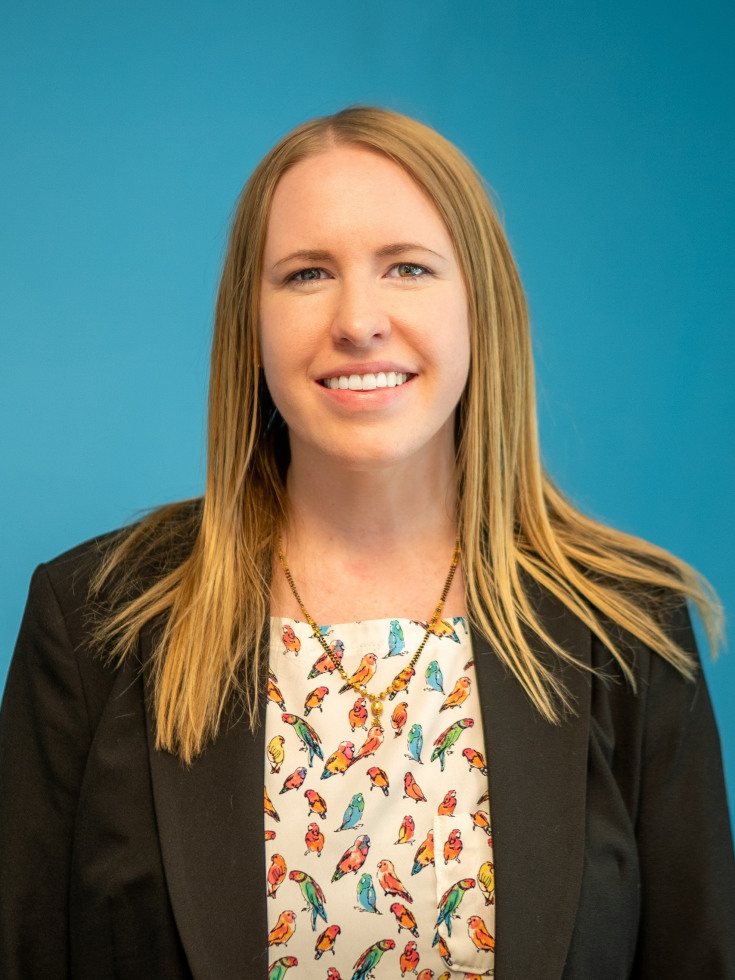
Smiling headshot of Ashley Stacy-Boddapati, MPH ’25.

The Clean Spice Initiative addresses overlooked sources of lead exposure. What challenges have you faced in addressing this issue?

It’s complex, because there isn’t a reliable way for a consumer to test spices at home. Spice samples must be accurately tested in a laboratory. In North Carolina, this service is available for free if a child’s lead level meets criteria for a home investigation at five micrograms per decilitre or higher. Lead contamination may also be detected in a single spice or single lot within a product line.

We do know that risk is lower if spices are purchased locally and are in a properly labeled package rather than shipped or hand-carried in bulk from other countries or scooped from unmarked bulk containers in specialty grocers. Therefore, educating on risk reduction is important. For example, a family may not know if their ceremonial powders contain lead, but they can observe children to prevent ingestion of powders and wash their hands before eating. Similarly, warning against the use of kohl/kajal that is sometimes used to line the eyes of children, and suggesting an alternative product, can prevent exposure.

Ultimately, a blood lead test is the best way for a parent to know if their child has been exposed to lead.  There is work being done to make environmental sample data publicly accessible. I have compiled reports of spices and other consumer products tested through environmental investigations in North Carolina and submitted the data to the New York City Department of Health’s Multijurisdictional Repository of Lead-Containing Consumer Products Pilot Project, which is led by Dr. Paromita Hore. Our hope is that this data will help consumers, aid in identifying trends across jurisdictions and lead to policy change in the U.S. and abroad. 

Looking back on your career so far—from bedside nursing, to clinical research, to public health leadership—what skills or experiences have been most important in preparing you for your current role?

I bounced around a little bit, which I don't regret, because it led me exactly where I wanted to be. But I would definitely say that the thread in all of those jobs was connecting to people. Especially in a bedside occupation, you have a short window of time where you’re trying to build rapport with your patient. They’re in a very vulnerable time, being in the hospital, and you’re trying to connect with them however you can. That has been helpful for me in every job that I’ve had. It’s just about comfort in talking to and connecting with people.

Also, I was always a joiner in high school and college, and that naturally transitioned into my career. Professionally, I'm always joining committees, and it helps build my confidence to take on big projects when I see the need.

Tell us about your experience in Brown’s Online MPH program.

I’m so glad that Brown created the Online MPH!

They are investing in online students with scholarship support, which not all programs for working professionals do. Often there’s this idea that if you’re working, you can easily afford the tuition, and scholarships are more likely to be reserved for on-campus students. I really appreciate that Brown is investing in students in the online space. 

They also do such a great job of bringing together talented cohorts, people who bring their work experience to classroom discussions. In my cohort, we had doctors, nurses, pharmacists and research professionals. There were a lot of people with relevant public health experience and people who’d already worked in government. So we were learning from faculty and also from people who have real-world advice from the things that they do day-to-day. 

We took a leap of faith joining the program in 2023 because it was still pretty new. But I had a good feeling about it from the meetings I attended before applying. I said, I think this is going to be where I want to be. And I was right.