Tell us about the food pyramid. What does it say and how is it supposed to shape our behaviors? I remember in school coloring the bottom: there were pictures of bread and grains, and then at the very top there were sugar and salt and oils.
Sacheck: Right. At that time, it was based on the latest evidence and grains and things like bread were at the bottom of the pyramid. So, we’re thinking the base of our plate probably should be grains and breads. And then as you went up, there were different portions of dairy, meat, fruits and vegetables, and then the things to avoid. So it gave us proportion sizes in a way that we might be able to translate to a plate.
What does the food pyramid actually accomplish?
You and I might have looked at our cereal boxes when we were little and saw that pyramid and learned about it in school. And kids for the past 15 years have learned about MyPlate.
But those guidelines help shape our national food programs: I’m thinking school lunch, Supplemental Nutrition Assistance Programs (or SNAP), anything that’s federally run or regulated such as Meals on Wheels, Women, Infants and Children’s programs, or WIC. All of these programs will be influenced by the relative proportions of what’s being promoted by the new dietary guidance.
The Dietary Guidelines for Americans are updated every five years. How does that process play out?
We usually have a committee of 20 or so scientific experts who actually review the latest nutrition guidance, and come out with a scientific report independent of lobbying, but also allow for public comment during that time period. That’s then handed over to the government and the new guidelines are released where lobbyists can come in, the government reviews it and then puts out the version for the American public.
How did that process look different this year?
What happened this time around was, back in 2025, the scientific report was submitted, and then that was overhauled by the new administration to have a new food guide pyramid that looks a lot different than the guidance that was provided. They basically picked a new team of scientists to revamp the guidelines in a very short period of time. And that process was less transparent as many people would like.
The serving sizes for fruits, vegetables, whole grains and dairy all stayed the same. And the recommendation that saturated fats only make up 10% of your calories stayed the same, too. But the protein recommendations, specifically animal-based proteins, did change. The amount we're supposed to eat every day, almost doubled. What do you think of these recommendations?
That’s the kind of intake we’d typically only see at the peak for a strength athlete who’s actively trying to build muscle. It’s essentially at the upper limit of what the body can realistically use for muscle growth during youth. Even in older adults, where protein breakdown is higher, that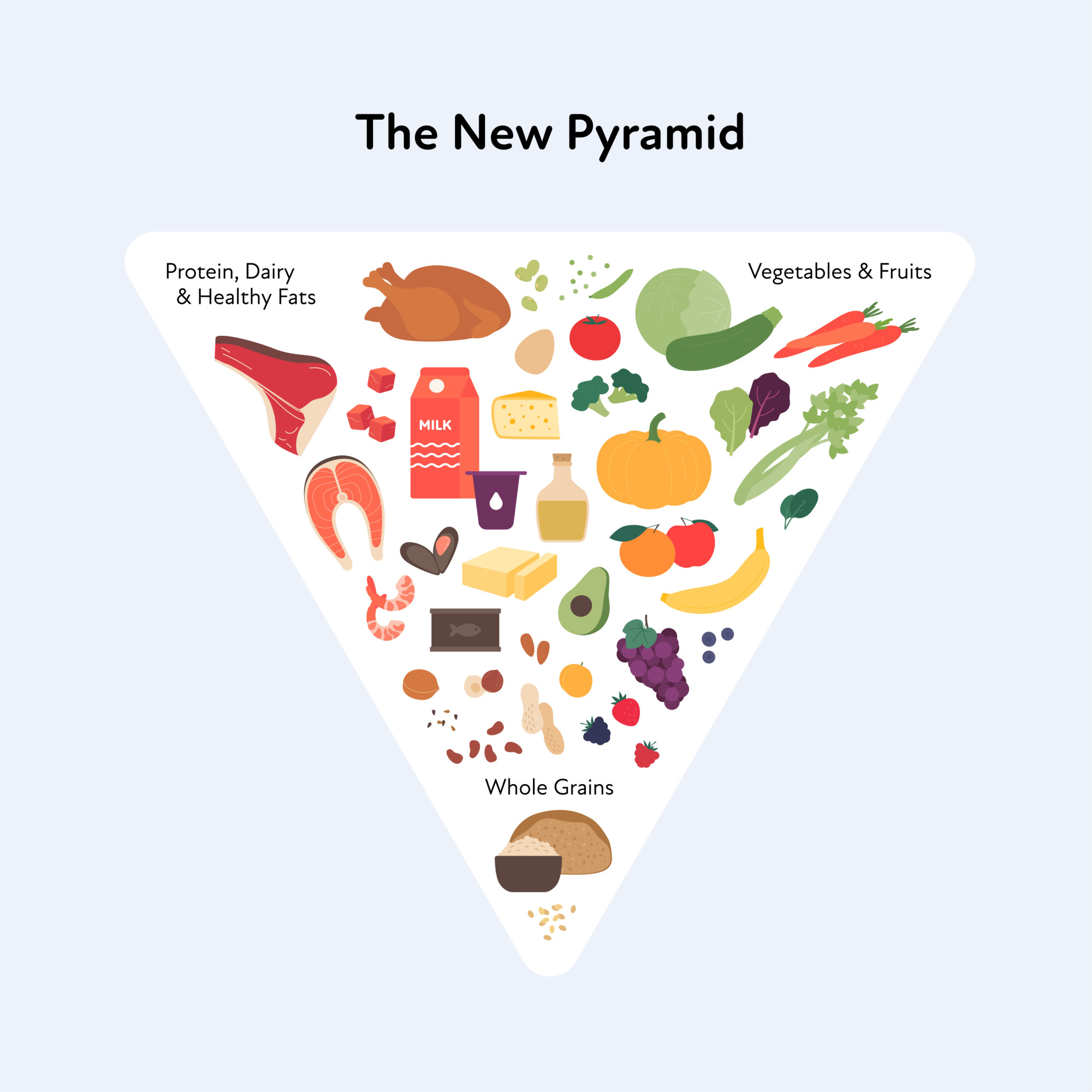 level is still right at the edge of what’s useful, and research suggests it’s not necessarily beneficial or even achievable for the average person.
This level of protein intake is for the kinds of people, like strength athletes, who are very intentional about everything they eat, making sure they’re replenishing and rebuilding the muscle they’re constantly breaking down. It represents a very high level of intake.
What happens if all Americans start eating like bodybuilders?
I don't think it's possible or sustainable or good for our environment, and I think if we eat too much protein, just like you eat too much of any macronutrient–carbs, fat or protein–any excess calories are going to be stored as fat.
I think a lot of people assume that when they eat protein, it goes straight to their muscles and just stays there—but excess protein can still be broken down and stored, and for some people, very high intake can put extra strain on the kidneys. It also increases your need for hydration.
But sure, protein is really important. I don't want to dismiss that. And it’s good to have it every meal. It’s satiating. It replenishes what’s lost after a workout. But you don’t need it in extreme amounts. Most people are already getting plenty as it is.
It can also conflict with guidance on saturated fat. If I’m telling you to eat more protein but also to keep saturated fat below about 10% of your daily intake, that can feel contradictory. If you’re not thinking about plant-based protein sources, you might default to foods like hamburgers and steak, which are higher in saturated fat, and that starts to work against a long-standing recommendation to keep saturated fat around that 10% mark.
Why are these changes happening?
It’s related to the movement to eat more whole foods and fewer carbohydrates. But I think there's also an enormous unfortunate lobby in the United States for dairy and beef cattle that's been present for decades. You look at the scientific committee that was put onto the new guidelines, they have conflicts of interest that they disclose with cattle and dairy, and that’s concerning.
I think the emphasis on protein we’re already seeing, especially alongside concerns about high carbohydrate intake, has, in some cases, been used to justify pushing even more protein. That can also align with the economic interests of industries like cattle and dairy in the U.S. And it’s not inherently wrong to care about and support those sectors, but when that influence starts to shape messaging in a way that inadvertently impacts health, that’s where it becomes a problem.