Alumni Spotlight: Dr. Angie Coronado ’14, M.D., MPH

As the Puente a la Salud clinic celebrates a milestone, co-leader Dr. Angie Coronado ’11 discusses her path from Brown to the front lines of community health, where she works to empower Chelsea’s immigrant families with holistic, culturally competent care.

When the COVID-19 pandemic exposed serious gaps in health care access, a community-based response took shape in Chelsea, Massachusetts. Through a partnership with La Colaborativa and Mass General Brigham Hospital, Puente a la Salud, or Bridge to Health, was launched to offer free health care at a moment of urgent need. The partnership celebrated its fifth anniversary on January 5 of the new year.

Led by Priya Sarin Gupta M.D., MPH and Angie Coronado ’14, M.D., MPH, alumni of Brown’s Family Medicine Residency and Community Health programs, respectively, the clinic was designed to reduce health disparities in Chelsea by providing preventive care, chronic disease management and adult immunizations. It also offers screenings for hypertension, diabetes and cancer, along with education workshops on nutrition and wellness, all within a culturally relevant and trusted community setting.
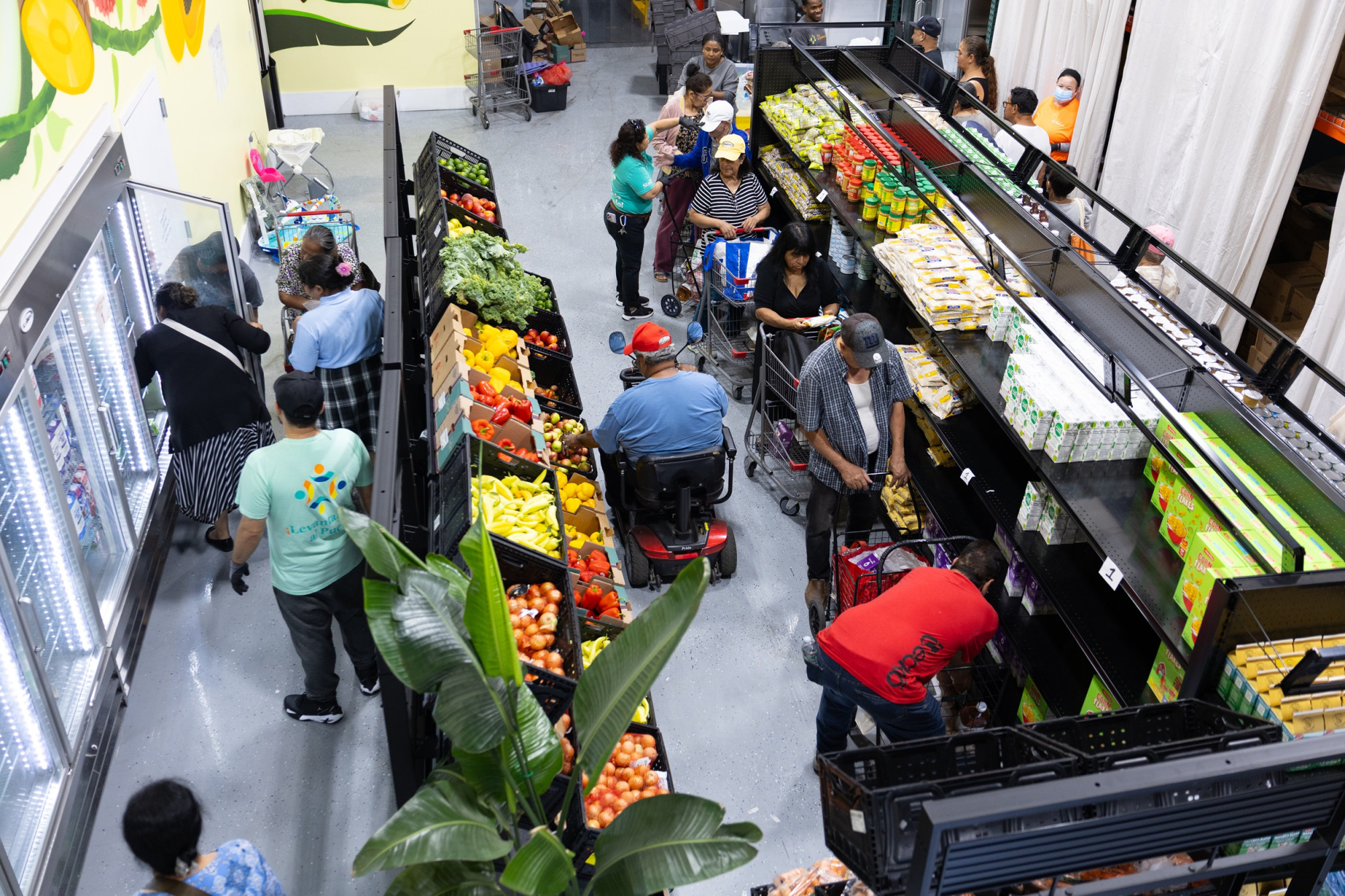
Puente a la Salud operates under its umbrella organization, La Colaborativa, which has been serving the people of Chelsea and surrounding cities for 38 years. A full-spectrum human services agency led by President and CEO Gladys Vega, La Colaborativa provides everything from counseling and clinical referrals to job training and food assistance. It also houses the Survival Center, which assists residents with eviction and domestic violence issues, among others, and La Placita (Little Square) where seniors gather to build connection and community. Together, these programs form an integrated system in which health care, food access, education and community support coexist and thrive.

“Everything here is connected. It’s a full circle: survival, stability, skills, health, dignity and collective action,” said Dr. Coronado. “But our goal isn’t just to provide services; it’s empowerment. We want people to know how to ask for help, how to call a doctor and how to navigate systems independently.”

We spoke with Dr. Coronado about the work of Puente a la Salud and La Colaborativa, the role these agencies play in Chelsea and Greater Boston and how her time at Brown changed her view of medicine.

Thanks for speaking with us, Dr. Coronado. Help us understand the challenges facing immigrant families today.

Coronado: Right now, one of the biggest issues is fear, which shows up everywhere. Children experience it as secondary trauma, even when they’re U.S. citizens. We’ve had students run home from school because they heard ICE was nearby. Even people who are fully authorized to be here panic when they see ICE. The fear is constant and deeply disruptive. Many of the families we serve are mixed-status, and we also work with second- and third-generation families who still face many of the same challenges.

At the same time, families are struggling with basic material needs. Food insecurity is widespread. Housing is in short supply, with as many as five families sharing one apartment because rents are so high. Employment is often unstable or low-wage, with long hours, even for people who go through our job training programs.

Health care access is another big barrier, especially preventive care. Many families don’t know how to navigate the system or even that preventive care is available. That’s why we created programs like Puente—to make healthcare understandable and accessible. At our Survival Center, someone might come in for help with an eviction or a MassHealth application, and while they’re here, we connect them to primary and preventive care. Without that integrated support, many people wouldn’t access health care at all.

Language and cultural barriers compound these challenges. We serve families who speak Spanish, Haitian Creole, Arabic, Vietnamese, Mandarin and more. Even when interpretation services exist, culturally competent care can be hard to find. Speaking the language isn’t enough—providers also need cultural understanding. When cultural practices are dismissed, trust breaks down quickly and care falls apart.

Education is also a major concern. Many students work during high school to help support their families, and after graduation, many don’t attend college because they need to earn income. At La Colaborativa, we run youth programs that include academic support, professional development and mental health services to try to address this.

Mental health is one of the most urgent and complex challenges we see. Care is especially limited as insurance may only cover a few sessions, and cultural stigma around mental health remains strong. So we take creative approaches, offering group-based supports like healing circles, dance classes and knitting groups. These spaces reduce isolation and build community, which is critical for mental health.

So when I think about the challenges immigrant families face, mental health really sits at the center—alongside fear, poverty, language barriers and lack of access. Addressing it requires more than clinical services. It requires community, cultural understanding and dignity.
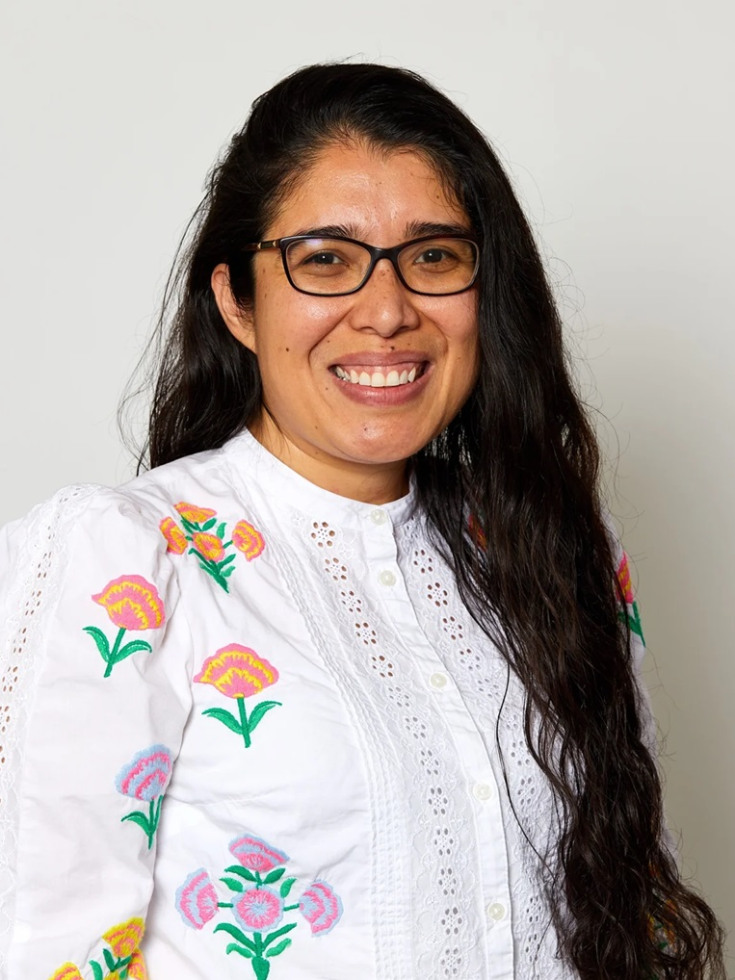
When I think about the challenges immigrant families face, mental health really sits at the center—alongside fear, poverty, language barriers and lack of access. Addressing it requires more than clinical services. It requires community, cultural understanding and dignity.

Angie Coronado ’14, M.D., MPH
 
Dr. Angie Coronado

So, La Colaborativa operates as a complete and holistic agency?

Yes, and that’s intentional. The first thing we focus on is stability. Survival, really. People come here sometimes without food, without work, without a clear next step. So we start with meeting immediate needs and then build pathways forward.

For example, employment and training are central. Just yesterday we had a graduation—about 300 people completed courses here. That included English classes, citizenship classes, computer  literacy, coding and workforce programs. We also graduated a cohort of community health workers in December—16 who completed 1,600 hours of training—who are now helping with patient navigation and working with local health care systems like Cambridge Health Alliance and Mass General Brigham. Many of them are now employed there.

We asked: How do we increase the health care workforce in Chelsea with people who actually reflect the community—people who look like us, who grew up here, who speak Spanish? So we proved our models, built training pipelines, and now community members are in those roles, serving other community members.

Workforce development is part of health equity. Employment reduces stress, improves food and housing security and creates stability. It’s all connected. That’s why many of our workforce programs focus on young adults, especially those ages 18 to 24. College isn’t always accessible, and many people need to work immediately, often in unstable or low-benefit jobs. What they tell us is that they want stability, benefits and health care for themselves and their families.

So we offer pathways: community health work, HVAC training, coding and more. We also offer citizenship classes, English classes and computer classes. Many people don’t know how to write an email, navigate a patient portal, refill a prescription or request an appointment. We teach all of that, in Spanish, so people can advocate for themselves.

How did your time at Brown help prepare you for this work?

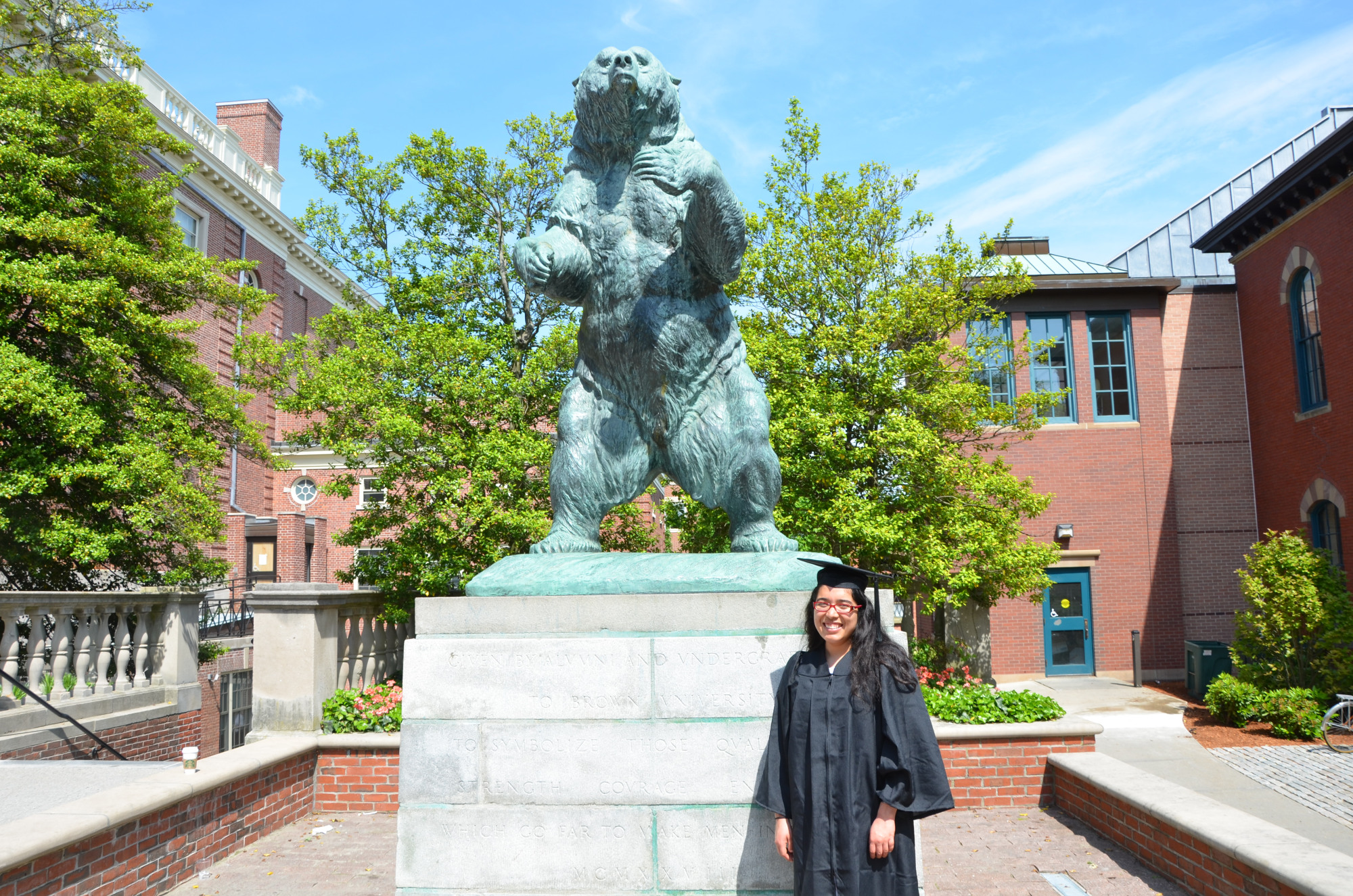
When I was at Brown, I actually went in planning to be pre-med. I was really interested in neuroscience, so I took a lot of neuroscience courses and physiology. But during my physiology class, I started learning about community health. We had guest speakers—Eric Loucks came in to talk—and I was also involved with Health Leads, which was called Project Health at the time.

That’s really where I was first exposed to the idea of social determinants of health. I remember one presentation in particular about a bus driver and how his working conditions affected his heart health. He was under constant stress, having to hit exact times at every stop, sitting for long periods, dealing with extreme heat and cold and sometimes even facing aggression from passengers who were late to work. This wasn’t a one-off situation; it was something he experienced every day.

For me, all of this was completely new. It changed the way I thought about medicine. I started to really understand how social stressors—chronic stress, financial insecurity, work conditions—affect the body, from the immune system to overall health, making people more vulnerable to illness.

“ Community‑based organizations matter because the community trusts us. That trust translates into people being willing to seek care at all. ”

Angie Coronado ’14, M.D., MPH

For both individual patients and for the broader relationship between immigrant communities and the health care system, what would success continue to look like for Puente a la Salud?

Honestly, I wish Puente didn’t have to exist. In an ideal world, people would just go directly to care. Everyone would have access. Care would be culturally competent, linguistically accessible and equitable. If that world existed, there wouldn’t be a need for a program like this.

But I also know the reality. Community‑based organizations matter because the community trusts us. That trust translates into people being willing to seek care at all.

So success, to me, looks like more models like this: clinics embedded in community centers, not just here but across the country, especially in rural areas and health care deserts. It looks like fewer disparities: no higher rates of cervical cancer among Latina women, no worse outcomes for Black women. If those disparities didn’t exist, we wouldn’t need to be here.