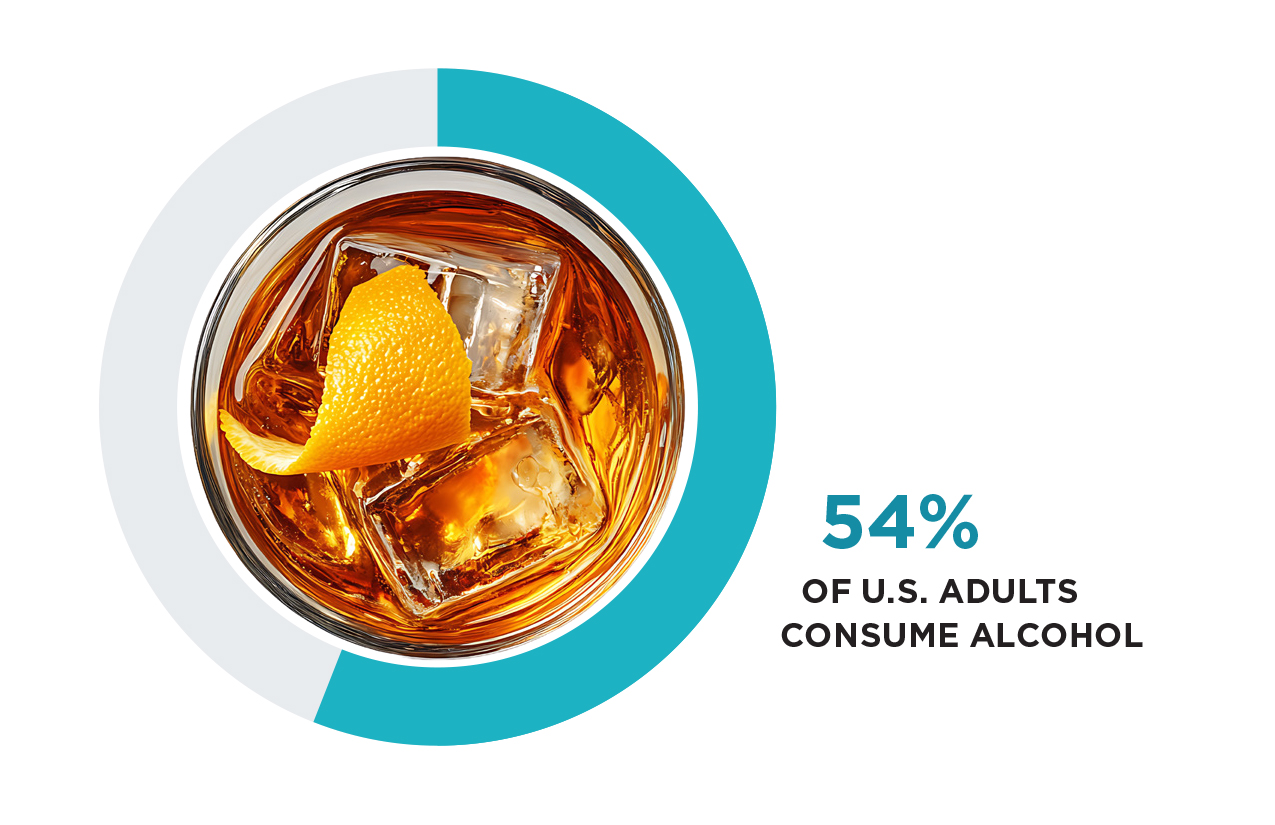
“There is a normalization that we can do things without alcohol and that those things will be just as fun,” says Kahler, director of the Center for Alcohol and Addiction Studies (CAAS) and professor of behavioral and social sciences in the School of Public Health. “That’s the cultural change that we’re seeing. And it can definitely be helpful for people who really do have a problem with alcohol and want to drink less, and also for people who are just saying they’d like to skip it a few nights.”
More options than ever
Along with a changing drinking culture, new options are reshaping what a night out (or in) can look like.
Those who want to go out and have the experience of having a drink, but without the calories, potential hangover or health risks associated with alcohol, can still do so at places like Loma in Providence or Sans Bar in Austin, which built its entire concept around alcohol-free drinks. There’s also been an explosion in zero-proof spirits, with sales surpassing $11 billion in 2022, and a rise in alternatives that give a more natural buzz, like non-alcoholic spirits made from the South Pacific kava root.
One alternative some experts at CAAS have been paying close attention to is cannabis. Daily marijuana use is now more common than daily alcohol use in the U.S, especially among people ages 19 to 30, who often say they prefer the effects of weed or see it as a lower-cost, lower-risk alternative to alcohol, particularly when it comes to hangovers and next-day impacts.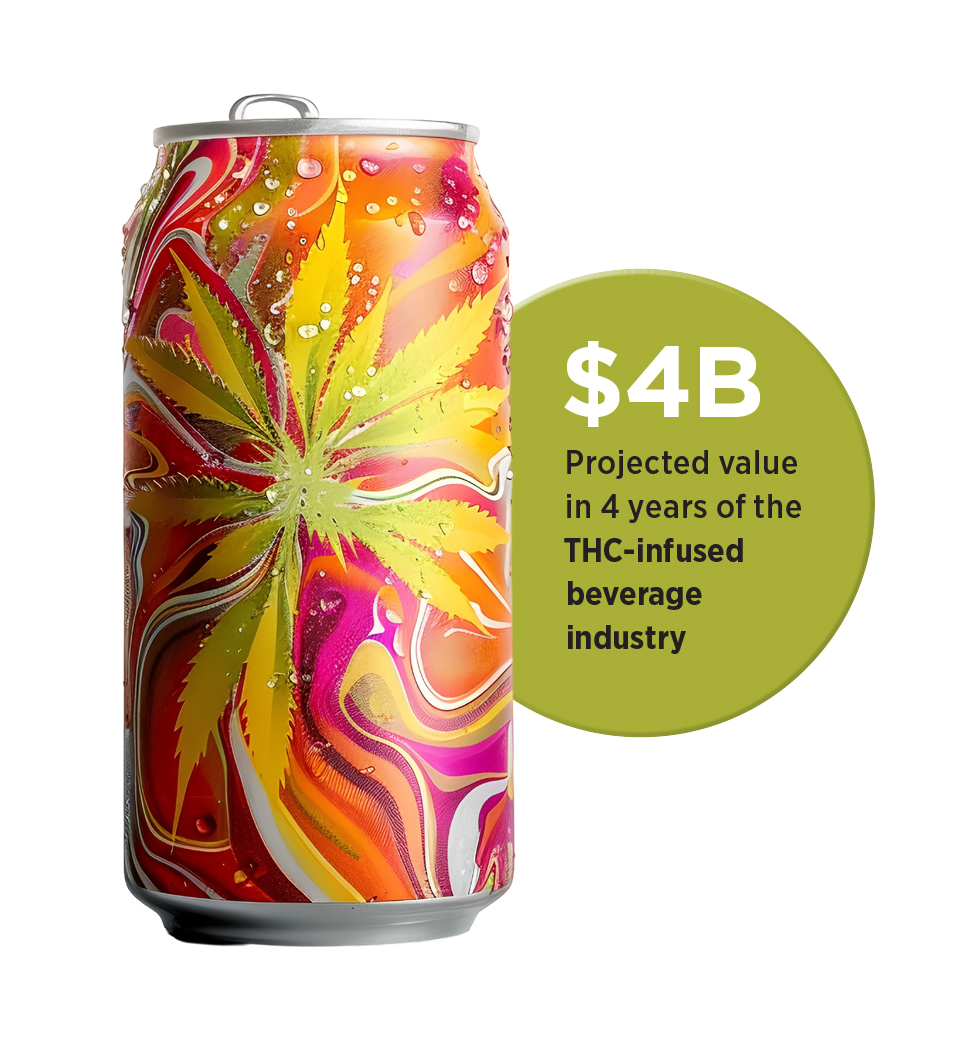
At the same time, THC-infused beverages—which are made with the active ingredient in marijuana—are increasingly flying off shelves and are expected to become a $4 billion industry by 2028, according to some recent projections.
Jane Metrik, a professor of behavioral and social sciences and of psychiatry and human behavior, points to the “California sober” trend, where people partake in cannabis but not alcohol. The idea has spread from Hollywood, to health influencers, to homes across America, with many people saying cannabis helps them drink less by reducing their urge to drink.
Metrik tested that claim in a randomized, placebo-controlled trial in which drinkers smoked a cannabis joint and were later offered their favorite alcoholic beverage. The results suggest that marijuana reduces the urge for alcohol in the moment, lowers how much alcohol people consume over a two-hour period and even delays when people start drinking once alcohol is available.
“We can’t tell anyone yet, ‘you should use cannabis as a substitute for problematic or heavy drinking,’” Metrik says. “Much more study is needed.”
But similar hopes extend to GLP-1s, as many addiction researchers, including CAAS’ Carolina Haass-Koffler and Cara Murphy, work to understand how effective drugs like Ozempic may be at reducing alcohol cravings. Today, six percent of Americans are currently using the medications, which early evidence suggests may help curb alcohol addiction.
Benefits of taking a break
Sobriety challenges like Sober October, No-Drink November and Dry January have surged in popularity in recent years, drawing millions of participants. The idea is simple: stop drinking alcohol for a set period of time, usually an entire month, and see how it feels. For many, the hope is that it leads to less drinking afterwards. But does it?
A team of CAAS researchers, including Matthew Meisel, assistant professor of behavioral and social sciences, and Brown University medical student Sara Uriate, set out to answer that question by studying people taking part in Dry January.
They found the short break in drinking led to improvements in sleep, mood and energy. Participants who cut alcohol out completely for the month also reported healthier liver function, better blood pressure and weight loss. And even those who simply reduced their drinking experienced improvements in these areas, as well, showing the potential positive effects of any type of alcohol reduction.
The biggest takeaway was that, for many participants, the break led to lasting change, with most continuing to drink less afterward.
Neuroscientist and addiction psychiatrist Judson Brewer said this tracks with how behavior change happens. The mindfulness expert says drinking is often tied to an expected reward, like relaxing or feeling more social. People begin to reconsider it when they notice the results are not what they hoped and the downsides start becoming more prominent, especially as they age. Paying attention to those outcomes and the rewards that come with cutting back, like better sleep or feeling more energetic, helps people rewire their brains around drinking, recalculating whether it’s worth having a drink, or not.
“We sometimes call it a ‘bigger, better offer,’” Brewer says. “When you don’t drink and actually feel better—like getting a good night’s sleep—that creates a positive signal that helps reinforce the change.”
People are also paying closer attention than ever to how their daily habits affect their health, he says, and tools like Fitbits and other health trackers make it easier to get granular about it.
“I wear my Garmin at night to track my resting heart rate,” says Brewer, who directs research and innovation at Brown’s Mindfulness Center. “I can see resting heart rate often goes up several beats when I drink, especially if I’ve had a drink closer to bedtime. We didn’t really have that 15 years ago, so it’s easier today to isolate the variables and adjust accordingly.”
A complex problem
CAAS’ Suzanne Colby, a professor of behavioral and social sciences and a co-author of the Dry January review, says that while the growing “sober curious” culture is largely positive, giving people more ways to experiment with drinking less, she cautions that the reality of alcohol use is more complicated than the trends sometimes suggest.
Approaches that work for casual drinkers may not be enough for people with more serious problems, she says. And swapping alcohol for cannabis means trading one substance for another. A growing concern about going out for a mocktail is that it still places people in high-risk drinking environments, Colby adds. Even in the Dry January study, she and the team found that a small number of participants who were unable to complete the month, reported drinking more afterward in a so-called rebound effect. Also, the benefits seen in the review came from people cutting out alcohol and not replacing it with cannabis, so it’s unclear whether those same improvements would hold if someone swapped one for the other.
“It’s great that it’s so much in social media and we have influencers and people promoting this really large movement to try out abstinence or cutting back,” Colby says. “But there’s a whole continuum of people out there and these simply cutting back approaches aren’t for everyone. It’s something to look out for.”
A clearer, lasting message
“If a friend or family member or therapy client had asked me 10 years ago whether having one glass of red wine each night was good for them, I would have said something to the effect that it’s probably neutral and possibly beneficial in some ways,” says Associate Professor of Behavioral and Social Sciences Mollie Monnig, who studies alcohol’s effects on the body. “Now, I honestly in good conscience couldn’t say that.”
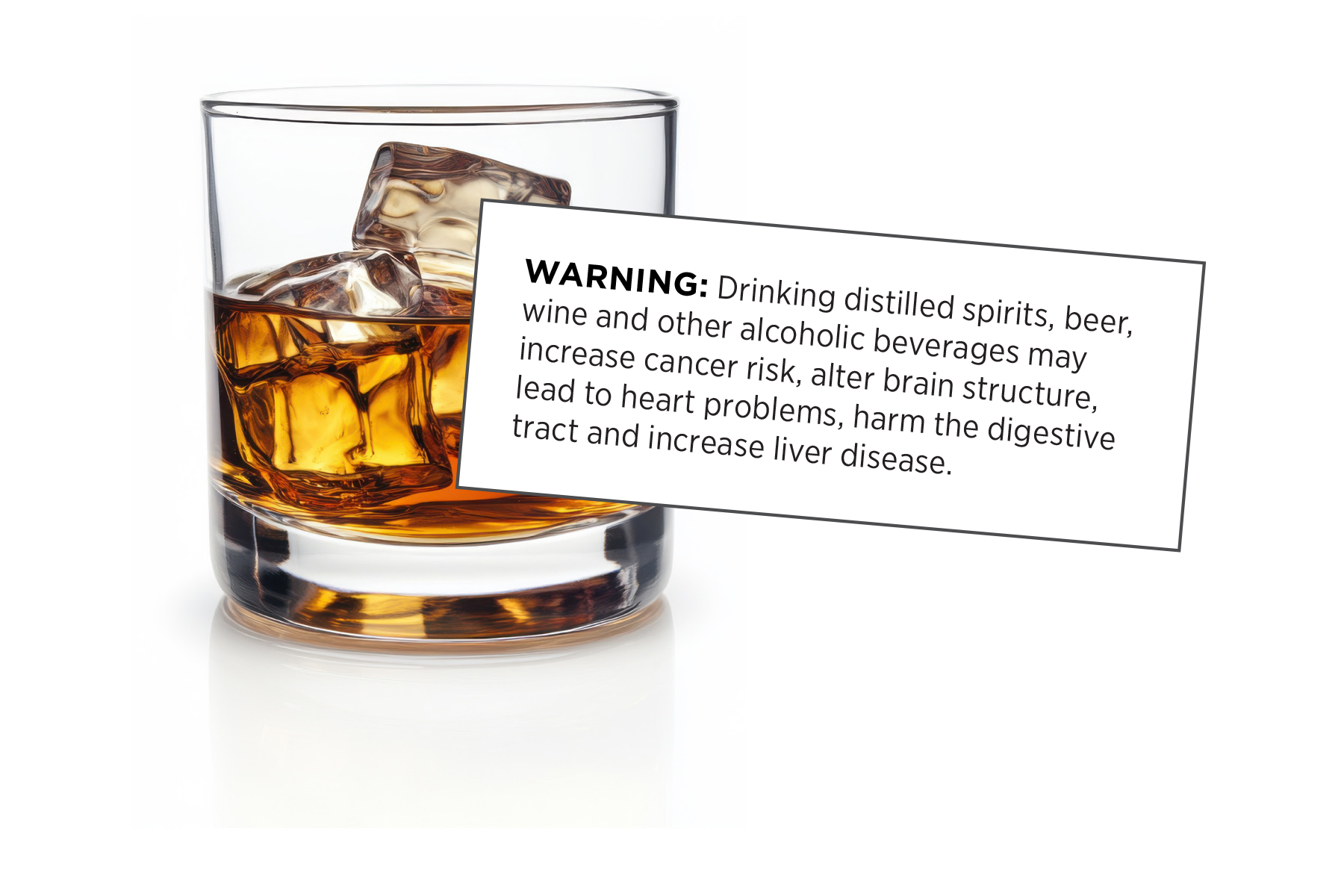
That’s because more carefully done studies have helped clear up a lot of the mixed messages about alcohol, including the idea that a glass or two of red wine could be good for the heart or even the brain. New research shows alcohol, which remains responsible for an estimated 140,000 deaths each year in the U.S, can alter brain structure, affect the throat, digestive tract, immune system and lead to both heart and chest problems and higher risk of liver disease.
The new evidence is contributing to much clearer messaging, Monnig says, like the U.S. Surgeon General report that warned alcohol is a leading preventable cause of cancer and recommended warning labels similar to those on cigarettes, or the earlier message from the World Health Organization, saying no amount of alcohol is safe and linking it to multiple cancers.
“The message is getting out there that no amount of alcohol is good for you,” says Monnig. “It’s finally being scientifically accepted.”
That gives Monnig hope that this more intentional approach to drinking isn’t going anywhere, even as federal guidelines on recommended daily limits for alcohol consumption were recently rolled back.
“It’s in the zeitgeist now,” she says. “There’s what seems like a general consciousness that taking a break is good for you.”
And, for many people, it is becoming a question of weighing risks versus payoffs, like choosing to eat a cupcake or not.
Other CAAS experts agree that reducing the harms from alcohol and other substances will likely remain on people’s minds, much the way the harms of tobacco have for decades. And, like tobacco, there will be a growing interest in lower harm products, like low-to-no alcohol beverages.
“My hope,” Kahler says, “is that the cultural part of this shift will persist and that public health messaging can continue to build on it.”