The Information Futures Lab at Brown University’s School of Public Health today announces its 2026 Visiting Fellows—six leaders in journalism, health communication, creative storytelling, public health and philanthropy who will be exploring new ways to improve journalism, public health communication and civic information infrastructure.
“These are leaders united in their strong understanding of information challenges, and their willingness to take risks, imagine and chart a path forward amidst uncertainty and change. We are beyond excited to provide them with a platform and support to do this critical work,” said Information Futures Lab Director Stefanie Friedhoff, professor of the practice of health services, policy and practice at Brown's School of Public Health.
Among the projects the fellows will explore is an investigation of how various investment models build resilient information ecosystems; a storytelling initiative to shed light on the mental health impact of climate change; and an effort to create and test new public health communication models that build community trust. Research-focused projects will evaluate how traditional news outlets can make better use of platforms like TikTok to engage audiences in quality content, and will investigate the role of narratives in how health reforms succeed in highly polarized contexts. Fellows will be pursuing their projects throughout the 2026 calendar year.
The 2026 Visiting Fellows
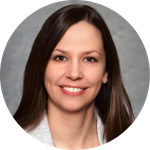
Sarah Deering
The communications director for the Wisconsin Department of Health Services-Division of Public Health, Deering is building on her experience with public health agencies to operationalize strategic public health communications centered on trust. Deering will leverage her experience in state and local public health, philanthropy, journalism and strategic communication to advance public health initiatives and respond to urgent and emerging challenges.
Laura García
An award-winning multimedia journalist, innovative social media specialist and creative storyteller from Mexico, García currently works at the BBC’s World Service in London. With a background in disinformation, García will research the role of TikTok in information ecosystems and the unique language of the platform as a community engagement tool. The goal is to give journalists practical advice on how to capitalize on the language choices that content creators make, to improve engagement with journalistic content through video formats.

Lizzy Hazeltine
Director of the North Carolina Local News Lab Fund, Hazeltine leads the fund's grantmaking and coalition building to expand local news and information access, and usefulness and help maximize the effectiveness of the pooled fund’s contributors. Hazeltine will explore how place-based, systemic investment models can build resilient community information systems by connecting journalism, health communication, powerbuilding and civic engagement organizations around their common goals and the people they serve.
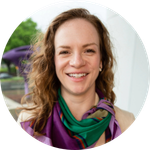
Dr. Lucinda Hiam
A Commonwealth Fund Harkness Fellow in Health Care Policy and Practice, Hiam is a family medicine doctor and global public health specialist from the UK with over 15 years of experience across clinical medicine, global health and health policy. Her work focuses on health equity and the political and social determinants of health. Hiam is based at Boston College and Brown University, where she is an Information Futures Lab (IFL) Fellow. Her project explores how people come together across divides to advance health policy, in politically polarized environments.
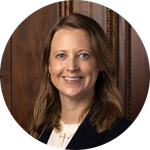
Leah Millis
A Pulitzer-winning photojournalist based in Washington, D.C., Millis produces work that spans politics, international protest movements, war, immigration, climate change, mass shootings and the rise of domestic extremism in the United States. In her project, Millis will use photojournalism and visual storytelling to create education about the psychological effects of climate change. Her project delves beyond eco-anxiety and climate depression and will provide insight and resources for people and communities confronting the vast consequences of the climate emergency.
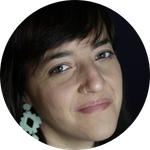
Rachel Reichlin
As lead consultant to United Way of Metro Chicago, Reichlin is building the Public Health Fund of Chicago, a new public-private partnership with the Chicago Department of Public Health. Its purpose is to strengthen public health capacity across the city, ensure a more nimble and equitable response in times of crisis and build and sustain trust between communities, health systems and government. With her fellowship, Reichlin will explore how information challenges impact community trust, and how partnering with leaders in the local information ecosystem can open new pathways for the fund to improve the health of Chicagoans.

“At the Lab, our mission is to build a better future for our public information spaces, one pilot at a time, and our visiting fellows are key to this mission. They are pursuing bold, groundbreaking examples of how this gets done,” said Friedhoff.
Over the coming year, the IFL will support these visiting fellows with training, interdisciplinary expertise, access to resources and a space that fosters solidarity, collaboration and innovative problem solving. The program is actively seeking support to more directly fund fellows and their pilot projects. Past funding has allowed fellows to incubate innovations such as the community communications platform Arclet, a youth health information influencer network and Building Bridges: An Immigrant Media Training Program.
About the IFL
Brown University’s Information Futures Lab is an interdisciplinary space for civic society leaders, journalists, researchers, public officials and other creators and sources of trusted information. Together, we respond to the ongoing information crisis as a civic and public health threat. Amidst rapid societal and technological change, we listen deeply, disrupt exclusive knowledge hierarchies, connect siloed leaders, expand access to quality information and strengthen skills to see past deception and manufactured controversy. Our vision is a future where people can access, create and make sense of information that is crucial to their well-being, and where communities can have productive conversations and solve urgent problems—so everyone can thrive.
Learn more about the Information Futures Lab and its initiatives on the IFL website
Media Contact
For questions, contact Caroline Hoffman.