Inside Brown’s new statistics curriculum

By eliminating redundant coursework, expanding elective opportunities and introducing R programming earlier in the program, the Department of Biostatistics is pivoting toward a deeper, student-focused and computational approach to the field.

Statistics shape how we understand the world. From tracking disease outbreaks to analyzing financial markets to evaluating public policy, statistical thinking is essential to solving today’s most pressing challenges.

Brown’s Department of Biostatistics has provided undergraduate students with the tools needed to excel in this field since 1997. Its undergraduate statistics concentration is based on the idea that statistics is both the art and science of data analysis, best taught alongside specific applications, and that it offers a path for students who want to apply mathematical reasoning across a range of fields. 

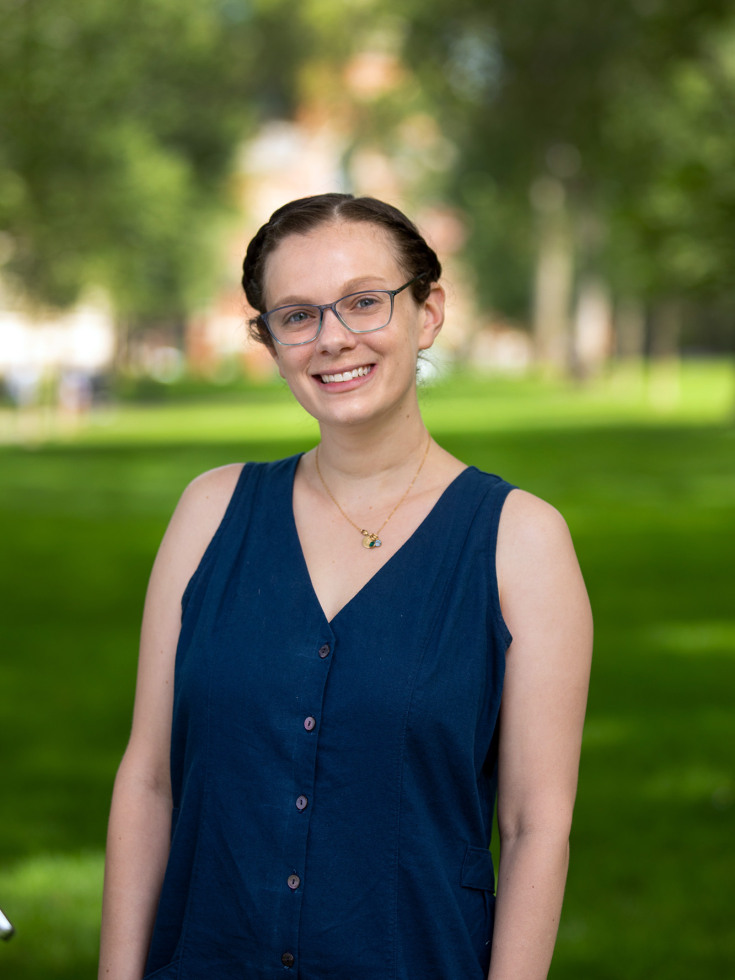
“I think one of the things that is really beneficial about our statistics concentration is that we're a biostatistics department, so for students who are interested in public health, they have so many opportunities for research, to take upper-level courses, to really dive into that,” said Alice Paul, director of the undergraduate concentration in statistics and associate professor of biostatistics at Brown. “And for students who are interested in other areas of statistics, it integrates very nicely and builds upon other concentrations as well.”

In 2023, Paul recognized an opportunity to modernize the concentration, review the curriculum and suggest improvements. This led to a full evaluation of the undergraduate statistics curriculum, involving input from dozens of students and alumni on coursework, community engagement and capstone and thesis requirements. 

Brown’s new, streamlined statistics concentration went into effect Fall 2026. Here are some of its highlights.

I think one of the things that is really beneficial about our statistics concentration is that we're a biostatistics department, so for students who are interested in public health, they have so many opportunities for research, to take upper-level courses, to really dive into that. And for students who are interested in other areas of statistics, it integrates very nicely and builds upon other concentrations as well.

Alice Paul director of the undergraduate concentration in statistics and associate professor of biostatistics at Brown
 
Alice Paul, director of the undergraduate concentration in statistics and associated professor of biostatistics at Brown

Elective Tracks: From Breadth to Depth

In the old curriculum, statistics students often encountered the same probability and inference material multiple times. Three required courses, in particular, covered similar ground. So the Department removed two overlapping requirements while keeping the most rigorous core course. This change eliminates redundancy, frees up space for students to explore more electives–five instead of two–and creates room for advanced, specialized study.

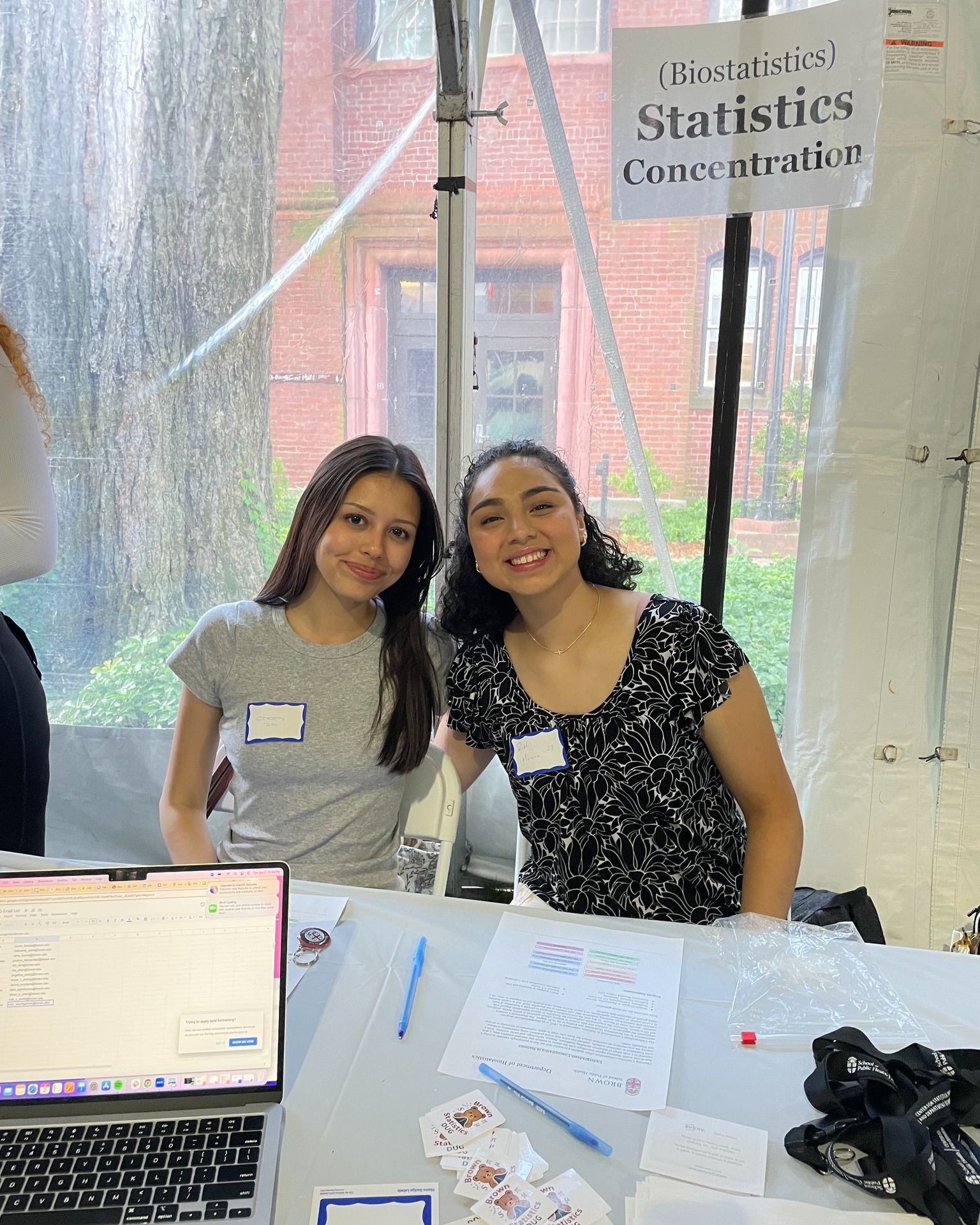
two young women smile sitting behind table
Statistics DUG leaders, Charly Castillo and Ruth Moreira Ulloa, at the Academic Expo hosted by Brown University on the Pembroke Green in  September 2025.

Instead of repeating foundations, students are now building on them by organizing their electives into “tracks” in areas such as Health Data Science, Economics or Statistical Theory. They may also design a custom track with approval. 

“The new tracks reflect the reality that many of our students are double concentrators, and the growing need for people who can not only demonstrate technical expertise, but who also can synthesize data into meaningful, evidence-based decisions and claims for positive impact,” said Ruth Moreira Ulloa, undergraduate concentrator and leader of the statistics Departmental Undergraduate Group (DUG). “Thus, the new statistics curriculum feels more tailored to students’ interests while also cultivating a form of critical thinking that can be applied across many different fields and inquiries.”

“At Brown, when you think about the open curriculum, the idea is for students to pursue their interests,” said Paul. “By freeing up space for more electives, we’re offering opportunities to dive deep into a specific area, especially as a lot of our students are double concentrators who are seeking to add statistics as a complement to their primary concentration.”

Earlier and Stronger Programming Skills

Modern statistics depends on computing. While Brown students consistently use R programming language for statistical computing and data analysis, many students and alumni reported that the course came too late in their studies due to conflicting prerequisites.

The new curriculum makes mastery of R itself the prerequisite for advanced applied coursework. This prioritizes practical data analysis, reproducible reports and hands-on skills that students can immediately apply. It also offers greater flexibility in fulfilling the numerical methods requirement, including options that use R rather than focusing primarily on other computing platforms like Matlab. 

“A lot of our students take the Introduction to Probability and Statistics courses during their freshman year, but they don't actually involve a lot of data, or really any data,” Paul said. “So we thought it was important for students to get their hands dirty with data early. We wanted to reinforce those concepts while looking at data, which can prepare them for success in future courses and make them more comfortable with R and with the more applied aspects of the courses.”

“ The revised statistics curriculum brings the concentration to a new level. It remains mathematically rigorous and rooted in statistical analysis foundations, while creating clearer, structured pathways for students to creatively explore applications across a variety of fields: public health, economics, statistical theory and even a self-designed interdisciplinary option. ”

Ruth Moreira Ulloa UG Departmental Undergraduate Group leader for Statistics

Strengthening the Capstone Experience

Every statistics student completes either a senior thesis or a capstone project. In the past, students who chose the capstone were not required to submit a written report to the Department of Biostatistics. The new curriculum adds a written report requirement for capstone students, which would be approved by a project adviser and submitted to the department. While less formal than a thesis, the report ensures every graduate demonstrates the ability to communicate statistical findings clearly and professionally, an essential skill in any career.

A Stronger, More Robust Program

In addition to reducing redundancy, expanding choice, strengthening computer skills and ensuring meaningful capstone work, the new curriculum aligns the program with how statistics is practiced today: collaborative, computational and applied.

“The revised statistics curriculum brings the concentration to a new level,” said Ulloa. “It remains mathematically rigorous and rooted in statistical analysis foundations, while creating clearer, structured pathways for students to creatively explore applications across a variety of fields: public health, economics, statistical theory and even a self-designed interdisciplinary option.”