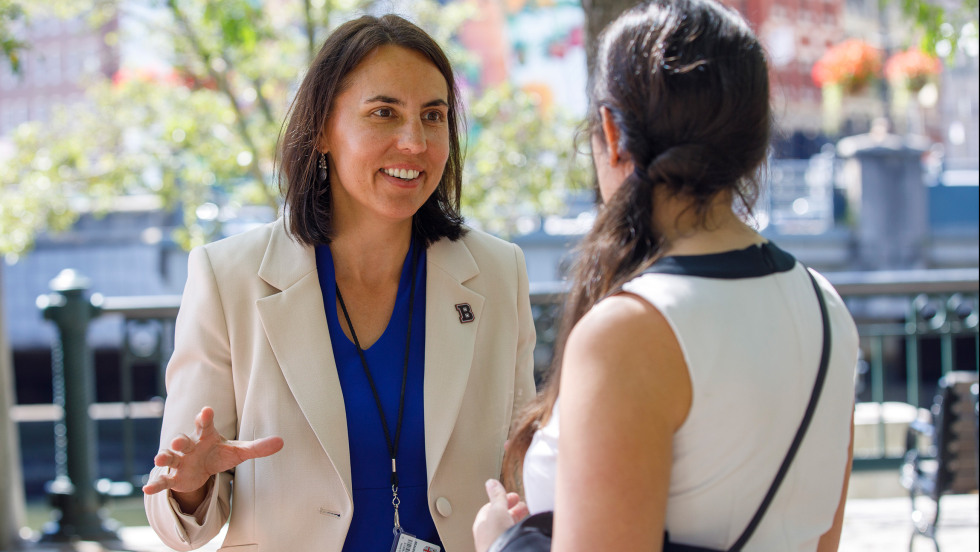
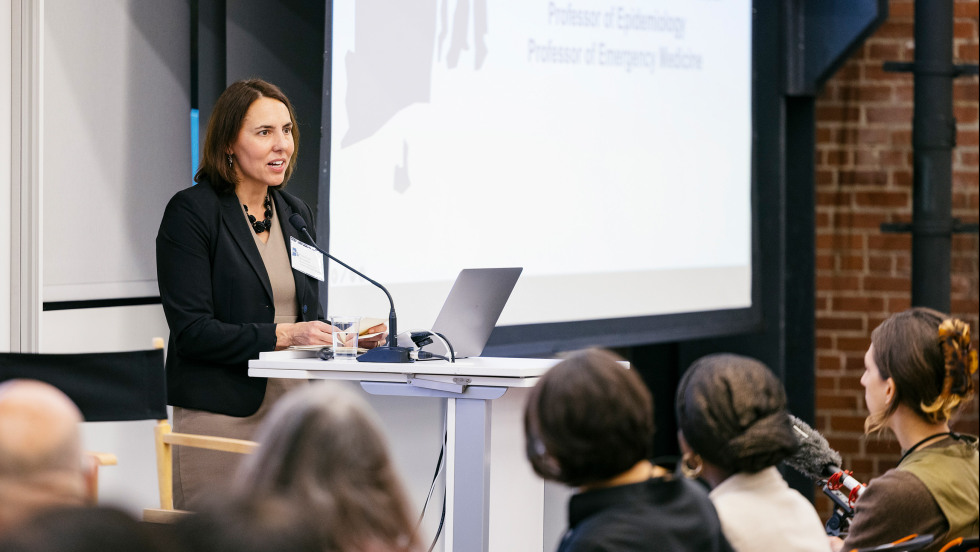
Dr. Francesca L. Beaudoin’s appointment as interim dean of the Brown University School of Public Health, which began on January 1, 2026, marks both a new chapter for the school and a full-circle moment for the physician-scientist. No stranger to Brown, Beaudoin has called the University home for nearly two decades as an emergency physician, clinical epidemiologist and academic leader and alumna of the School of Public Health.
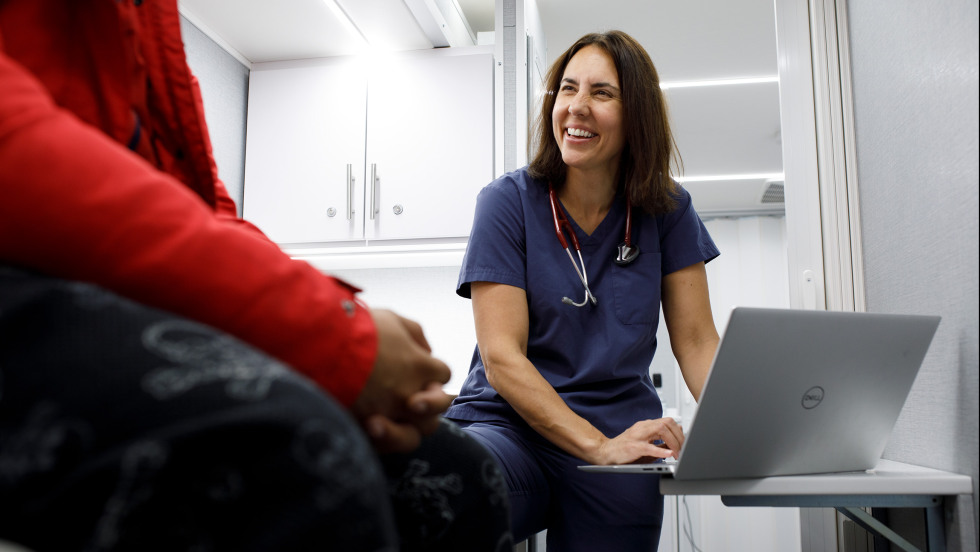
A national expert in addressing opioid use disorders and pain management, Beaudoin has spent much of her career on the frontlines of the opioid crisis and was one of the first physicians in the nation to serve patients through a mobile drug recovery unit. Beaudoin, who’s also held research roles at Brown’s Warren Alpert Medical School, takes the helm at the School of Public Health during a moment of reflection, following the tenure of Dr. Ashish K. Jha and the tragic shooting that occurred on Brown’s campus on December 13, 2025.
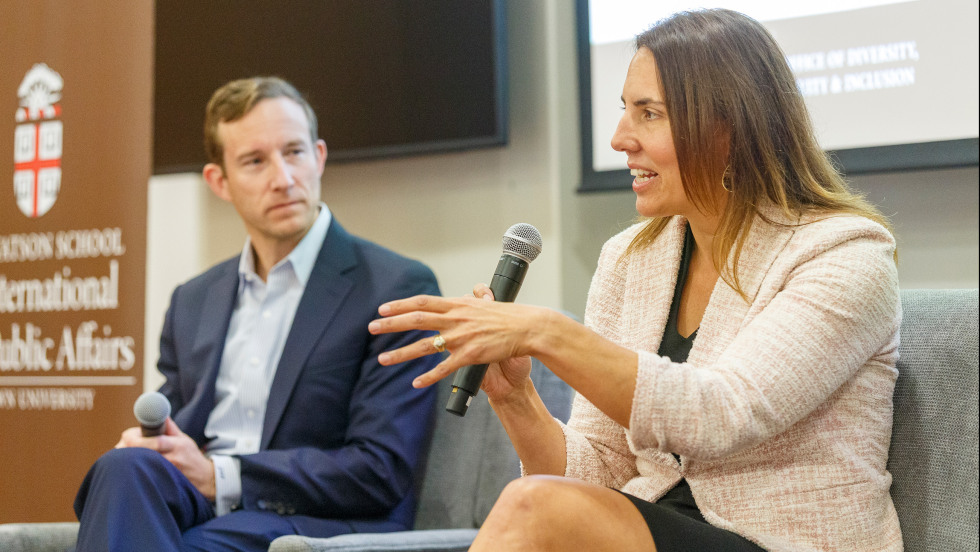
In this conversation, Beaudoin reflects on her path to public health, her priorities as interim dean and the role of community in guiding the school forward.
You began your appointment as the interim dean on January 1, but your history with Brown and the School of Public Health goes back much farther. How has that journey prepared you for this role?
My entire professional career has been, in some shape or form, anchored to this University. That long-standing connection means I bring a range of perspectives — from practicing as a physician in a Brown-affiliated hospital, to chairing a department at the School of Public Health, to teaching and sitting in the very classrooms I now help lead as interim dean. Having all those experiences in mind, lets me think about the people who are here and how they can best thrive and do their work.
My deep internal knowledge of the Brown ecosystem and genuine love for this place puts me in a unique position to maintain both stability and momentum at the school. And in this moment, culture, community and a deep understanding of what makes Brown Brown are more important than ever. It's such an honor to have this role be the culmination of my journey here and to help move public health at Brown to its next level.
What drew you to public health?
It happened in one of my earliest shifts as a newly minted physician and resident in our emergency medicine training program — I was so excited to finally be taking care of patients. I distinctly remember one of my first patients, a woman in her early 80s who had broken her hip. Hip fractures are a painful condition and managing pain is a mainstay of the initial treatment. So, I did what was considered best practice at the time and gave my patient morphine.
She almost stopped breathing, a side effect of the morphine. While this patient ended up being okay, I realized that we had a very limited tool belt for pain management and I wanted to do better, not just for this one patient, but for the hundreds of older adults who experience a hip fracture each year.
That was part of the spark that made me go back to school to get additional public health training, to have the technical expertise to generate data to guide better practice and policy. I wanted to be able to answer questions that could impact the lives of many — and still get brought back to the individual.
Today, the practice of how pain is managed for hip fractures is very different because of some of the work related to that patient. When I think about our school, this is what our faculty, students and staff bring to their work every day: seeing problems that affect individuals and communities — and figuring out solutions for them that get used at scale.