Public health takes many forms, but at its heart is a shared commitment to improving people's lives. Sometimes that begins with helping a patient better understand their treatment options. Other times, it means bringing healthcare directly into underserved communities, making essential health information more accessible or addressing the systems that contribute to unequal health outcomes.
At this year's MPH Practicum Poster Session, Brown University master of public health students showcased the results of the 145 hours each of them has dedicated to applying different approaches to improving population health. Through MPH Practicum experiences spanning clinical care, behavioral health, LGBTQ+ youth advocacy and health equity, 83 students demonstrated how classroom learning at Brown translates into meaningful contributions far beyond the university. Meet four of them!
Hip & knee replacement: Plain-language health communication
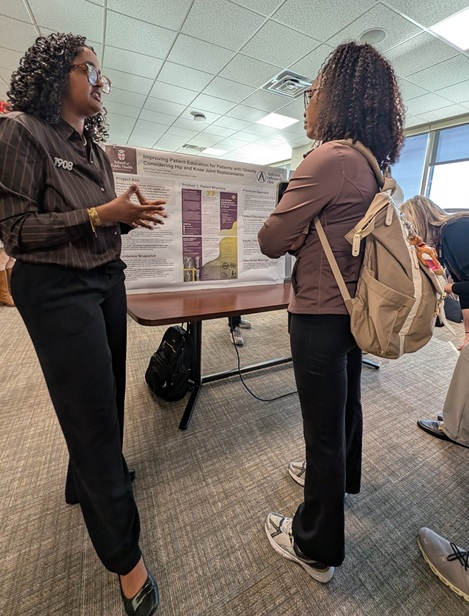 At Anderson Orthopedic Clinic in Northern Virginia, Maya Jonas (left) explored how patient education and health communication can shape the healthcare experience. Her practicum focused on developing a plain-language brochure for individuals living with obesity who are considering hip or knee replacement. The resource helps patients understand their treatment options, potential surgical risks and recovery, while encouraging informed conversations with their healthcare providers. Her work also considered how physician bias can influence these conversations and the importance of treating patients with dignity and respect.
A mobile approach to overdose and addiction
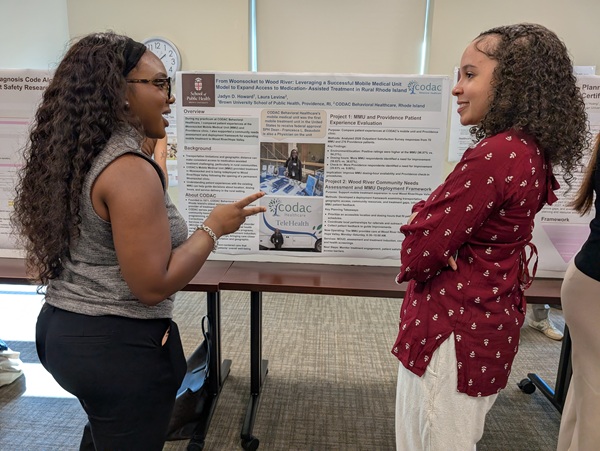
Access to quality healthcare involves more than what happens inside a clinical setting. For some communities, getting the care they need begins with having services available closer to home. That is where Jadyn Howard (left) and her practicum with CODAC Behavioral Healthcare in Rhode Island come in. Motivated by personal connections to the effects of overdose and addiction, Jadyn focused on the role of mobile healthcare in reaching individuals who face geographic and transportation barriers to treatment. She evaluated patient experiences at CODAC's Mobile Medical Unit and Providence clinic while contributing to plans for expanding mobile services into Wood River and Hope Valley. Her experience reinforced an important lesson: Effective community healthcare begins with listening to the people it is meant to serve, understanding their needs and ensuring they are treated with dignity.
Health education and advocacy for LGBTQ+ youth
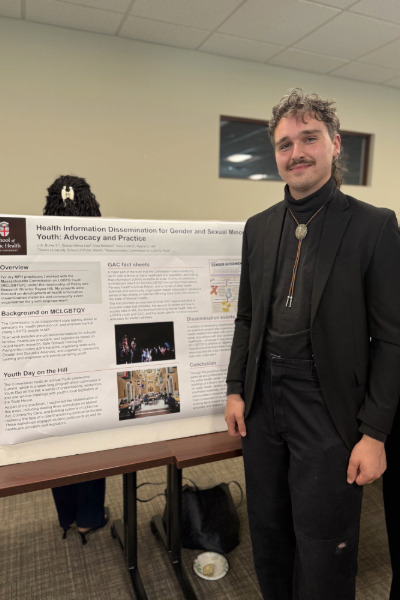 Access to healthcare extends beyond the availability of services. It also means ensuring that people have the information and resources to understand their health and feel represented in the decisions that affect them. This was central to Jroo Burke III's practicum with the Massachusetts Commission on LGBTQ Youth, where he worked to advance health education and advocacy for LGBTQ+ young people.
Drawing on research from health organizations and community-based sources, Jroo developed a series of fact sheets on gender-affirming care in Massachusetts, covering available services, where to access them and research on LGBTQ+ youth mental health. He also helped organize the Commission's annual Youth Leadership Summit, leading workshops on mutual aid, community care and collective resilience. Through this work, he made health information more accessible while creating opportunities for young people to engage in advocacy and community building.
Examining health disparities across Rhode Island
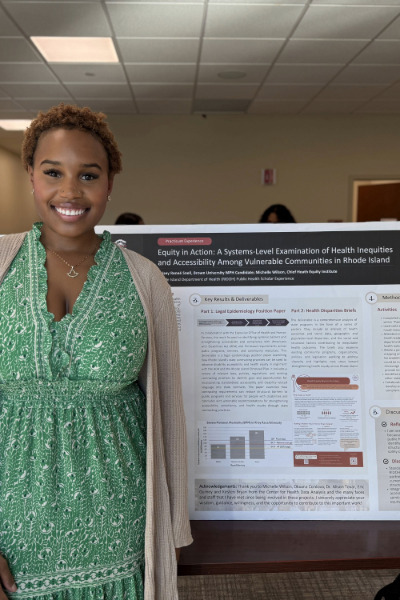 Making healthcare more accessible and inclusive also requires looking at the larger systems that shape people's experiences. Across Rhode Island, Kelsey Renée Snell explored these broader challenges through her practicum with the Rhode Island Department of Health's Health Equity Institute. Her work examined health disparities across the state, including differences in health outcomes among populations and communities, as well as the structural factors contributing to those inequalities. She also contributed to a disability accessibility project supporting Rhode Island's Olmstead planning efforts.
Through her experience, Kelsey gained a deeper understanding of how public health programs, despite having different goals, often intersect in addressing shared challenges. Her work emphasized the importance of looking beyond individual health outcomes and considering how policies, public services and accessibility shape opportunities for people to achieve better health.
Together, the students' experiences reflect the many ways public health takes shape: through patient education, community engagement, advocacy, research and efforts to create more equitable systems. While this year's Practicum Poster Session showcased 83 different student approaches to diverse public health challenges, their work shared a commitment to understanding people's needs and finding ways to address them. This combination of knowledge, compassion and action brings public health at Brown beyond the classroom and into the communities it serves.